

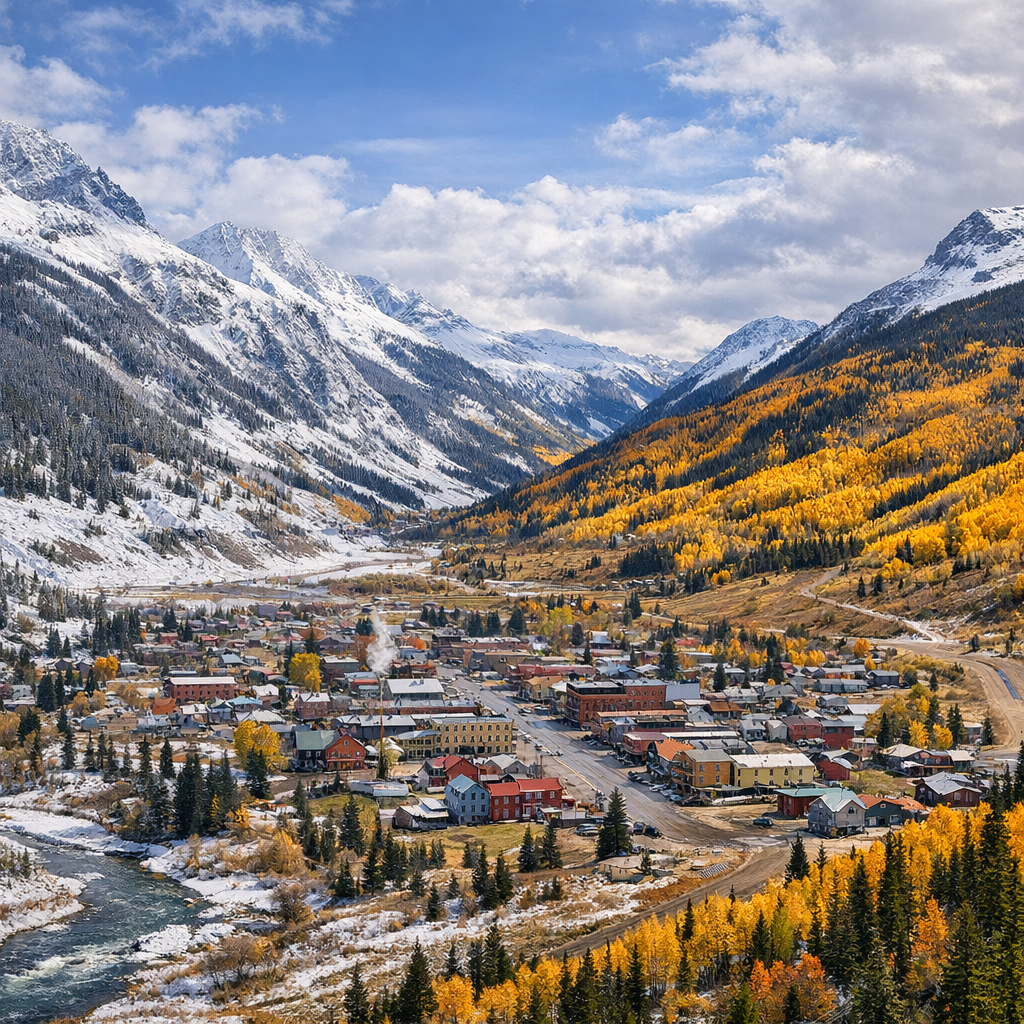
Silverton, Colorado, nestled at an elevation of 9,318 feet in the San Juan Mountains, experiences a distinctive alpine subarctic climate characterized by cold, snowy winters and mild summers. This high-altitude environment not only shapes the town’s weather patterns but also presents unique environmental challenges.
Seasonal Weather Patterns
Throughout the year, Silverton’s climate exhibits significant variations:
- Winter (December to February): Temperatures often drop below freezing, with averages ranging from lows of -4°F to highs of 34°F. Snowfall is substantial, contributing to the town’s picturesque winter landscape.
- Spring (March to May): A transitional period where temperatures gradually rise from lows of 8°F in March to highs of 57°F in May. Snowmelt during this season can lead to muddy trails and increased water flow in rivers.
- Summer (June to August): Mild and pleasant, with average highs reaching up to 73°F in July. However, afternoon thunderstorms are common, particularly in July and August, necessitating early starts for outdoor activities to avoid lightning risks.
- Autumn (September to November): Temperatures decline from highs of 64°F in September to lows of 9°F by November, with the return of snowfall marking the approach of winter.
Environmental Considerations
Silverton’s rich mining history has left a legacy that continues to impact the environment. The presence of hydrothermally altered bedrock containing sulfide minerals can lead to the production of acidic and metal-rich leachate, affecting water quality in local watersheds. Studies have utilized geographic information systems (GIS) to identify geological variables influencing these conditions, highlighting the need for ongoing monitoring and remediation efforts.
Additionally, the town’s high elevation and surrounding topography make it susceptible to natural hazards such as avalanches and wildfires. The Million Dollar Highway (US-550), connecting Silverton to Ouray, is notably avalanche-prone, requiring periodic closures for safety. Residents and visitors are advised to stay informed about road conditions, especially during winter months.
Adapting to the Environment
Understanding and respecting Silverton’s unique climate and environmental challenges is essential for both residents and visitors. Proper preparation, such as acclimatizing to high altitudes, being aware of weather forecasts, and adhering to safety guidelines, ensures a safe and enjoyable experience in this remarkable mountain town.